I just wanted to express my thanks since I’ve been getting a lot of use from this site- I also thought you might enjoy hearing about how we’ve been using it.
Our mentoring program does a fun summer camp called Citizen STEM where kids learn about environmental issues & how they can get involved. Right now we’re learning about wildfires while keeping up on current events since they are happening not too far from us.
One of our attendees in particular has been super helpful since he’s a self-proclaimed “weather geek” and reads a lot about atmospheric science; superstar seventh-grader Noah!
Noah wanted to do some extra research so I was helping him use the computer which is how we found you here: FruitlandFireFair -> What Can I Do to Prepare ..it was tough finding sites that I felt comfortable letting him use on his own so thanks! Plus you gave us some good talking points for the group. To return the favor I thought we could share some of his other favorites like this wildfire guide with safety/prep info- https://www.homeadvisor.com/r/wildfire-facts-and-safety/. We thought it would be a good contribution to your page.
I’d love to show the gang how he’s already getting involved as a citizen scientist! He also recommends an app called Wildfire Info- we’ll let you know if we find any more good ones.
Available for immediate Release
Run through May 27, 2017
========================
With all of the moisture received in our area this winter the grasses and wild flowers will be thick and as their green beauty fades, they will die quickly leaving flash fuel for wild land fires.
In our very windy basin, wild land fires can spread through grasses and trees very quickly taking homes, buildings and structures too.
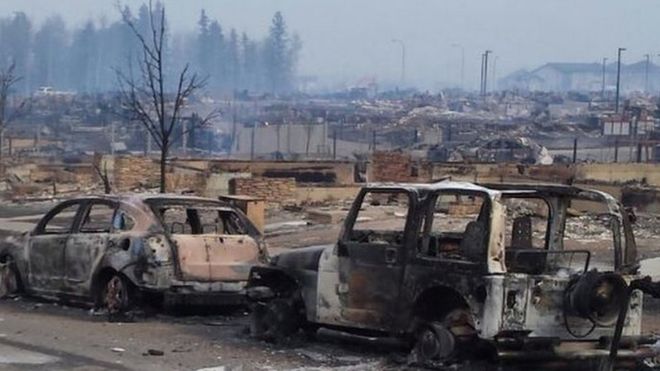
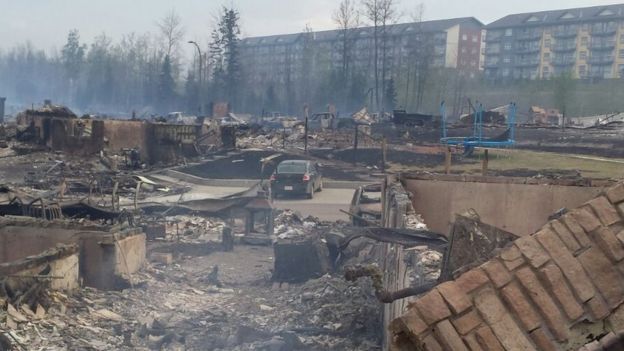
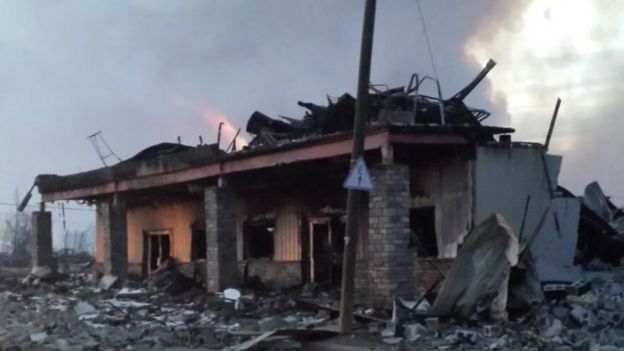
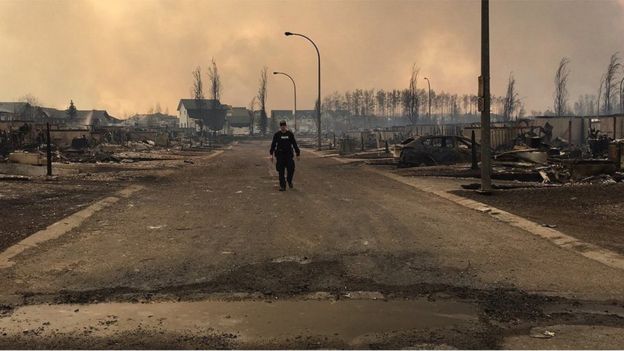
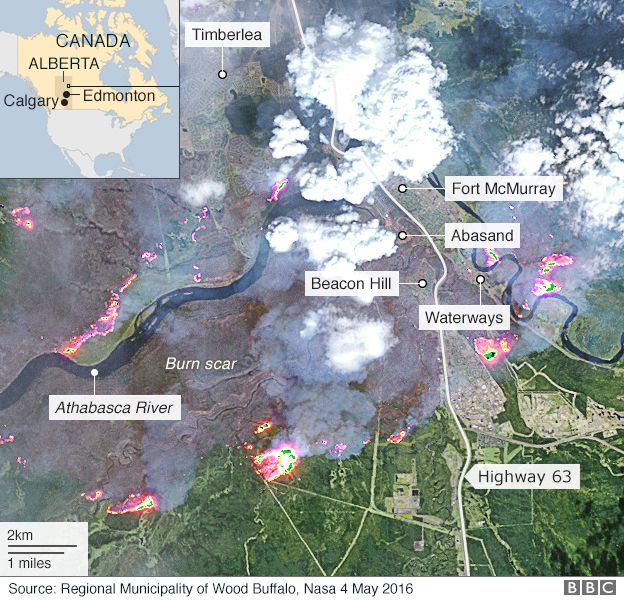
Last year at Fort McMurray Canada, an area the size of Roosevelt was completely burned to the ground by a wild land fire.
The national weather service is predicting that the monsoons that usually keep our area wet and hold our wild fire danger down will arrive about 4-6 weeks late this year.
Because of this we are advising everyone to work on their “Defensible Space” to remove tinder fire fuel from homes, cabins and out buildings.
Clean fire fuel away from structures for at lease 30 feet. This will help keep fast moving fires away from your home or cabin and keep fire fighters safer in the event that they need to protect your home or cabin.
In conjunction with this upcoming fire season,
The Fruitland Fire will be Saturday May 27th from 10 to 4
at the Fruitland Fire Station located at the main intersection on Hwy 40 in Fruitland Utah.
Admission is free and there will be vendors for shopping and serving food, games and freebies for kids, home fire prevention tips, brochures and demonstrations for all.
For everyone’s enjoyment all of the fire trucks, ambulances, police cars, and special equipment will be on display.
PLUS Fun, practical and some very expensive Door prizes and gift certificates are given away to those in attendance every 5-7 minutes throughout fair hours.
Vendor spaces are free this year and there are only a few left so act quickly.
For more information Go to www.FruitlandFireFair.org
Volunteer Hours otherwise known as “In-kind Hours” are one kind of support for non-profit organizations or communities.
In-kind hours are given by a member of an organization or a community in lieu of cash. These hours are counted the same as if the member had given cash or goods to the organization/community. The organization or community must beforehand have in its statutes or bylaws how the organization/community will value each hour or portion thereof in monetary terms or as if it were given as cash.
The value of the in-kind hours is established state by state based on: how many hours were donated and by the number of people donating the hours in that year.
In-kind hours can consist of time spent for the organization or community, or it can be the provision of a tangible asset donated to, used by or for the infrastructure. This also includes money expenditures of the members in which the members may spend to assist themselves in the completion of their donated time.
Miles driven by members from home to the event place and back are also counted as an In-Kind asset for the organization/community.
Examples of goods, services and expenditures are: use of services and facilities, professional services rendered or purchased or expertise in the form of staff time, use of or access to members equipment and/or special materials. These examples must be regarded as necessary to carry out the in-kind time tasks in which to achieve the goals commonly agreed on by the organization or community and its members. They must be goods and services donated by member(s) which would have been necessary for the organization or community to purchase or pay for to achieve the same objectives or goals.
The Fruitland Firewise District is a local charter of the National Firewise Agency which is a sister agency of the National Fire Protection Agency (NFPA.org) and as such is benefited by “In-kind” hours and donations from all members of the Fruitland, Duchesne County community or anyone from outside of the community working on land in the Fruitland Fire District. Those performing the work have no age limit so all family members and friends count.
The agreement is that the hours value is based on State donation data which has (accounting for inflation) been increasing about 1.5% in value every year.
The State of Utah Forestry and Fire Department is allowed to accept “In-kind” hours from all community members for: Work that you do or pay someone to do to your property located in Duchesne County like:
Creating Defensible Space to prevent your cabin and out building from burning should a Wild Fire threaten.
Pruning and removing brush on your property.
Raking, hoeing, shoveling, etc. on your property to enhance or create defensible space.
Paying someone to do any of the above. Note: If you pay them less than the State of Utah’s documented In-kind hours, you should count their hours and not the money you paid them as the In-kind time will be worth more to the state.
How does In-Kind time benefit me?
The federal government and other foundations have grants that are given, up to dollar for dollar matching of In-kind hours value to cash. So if the area donated $100,000 worth of in-kind hours, the grant may be as high as $100,000 cash to the local wild land fire district or area to prevent and/or fight wild land fires.
These grants are used to pay Wild Fire Crews and all of the support services to fight wild land fires in the State where the “In-kind” donations were received and in particular, the fire area/district from which the donations came.
When NOT fighting fires, these crews are also paid by these same grants to help members of the community create and maintain their defensible space around homes and buildings. This defensible space is also a safety enhancing service that helps protect fire fighters in the event of a wild fire.
This is why accounting for the time you and your family and friends spend on your property in the Fruitland Fire District “sprucing it up” to create and maintain defensible fire space is so valuable to our area. It’s How We Pay Our Firefighters.
The value of Volunteer time in Utah
(usually higher than the National Average):
2018 = Expected $24.99 per hour
however data is not available until April of the following year end.
2017 = $24.63 per hour (approx until data is released) 2016 = $24.27 per hour
2015 = 23.92 per hour
2014 = 23.51 per hour
2013 = 22.65 per hour
2012 = 22.07 per hour
2010 = 18.19 per hour
Source: Independent Sector
Also see the chart: State by State Values
Also see: Volunteering in America
From BBC: A car the only thing untouched by the fire sits a top a concrete slab.From BBC: A burned out churchThis image from the Alberta RCMP (Royal Canadian Mounted Police) shows an officer walking the deserted burned out city streets.
Utah Fire Info– includes current info on wildfires, restrictions on high risk activities such as FIREWORKS; shooting firearms, etc.
InciWeb – another source of current info on wildfires all over the country. The link will take you directly to the page for Utah’s fires.
Evacuation Plan – suggestions for advance preparations ****************************
Saturday, July 14, 2012, 6:57 a.m.
The fire to the south noted yesterday has been named the Lake Canyon Fire. Here’s the text of the summary at Utah Fire Info for your convenience:
“Duchesne, Utah … A fire in Lake Canyon was reported the afternoon of July 13 that is about 30 acres in size and burning in heavy timber. The fire is approximately 20 miles southwest of Duchesne, Utah on the Roosevelt/Duchesne Ranger District of the Ashley National Forest. The fire is burning in a remote location in the right fork of Lake Canyon near the end of Forest Road 175. The nearest structures are located five miles to the northeast. Smoke from the fire may be visible on U.S. Hwy 191, located six miles east of the fire. Presently, no closures are in effect. However, fire crews are asking individuals to please avoid this area in order to ensure firefighter access and allow passage of fire equipment. Currently, there are two 10 person crews, five engines, two single engine air tankers, and one light helicopter working on the fire. ”
It looks like the area may be getting rain from the same storm we’ve been enjoying in the Fruitland area all night.
Friday, July 13, 2012, 6:04 p.m.
I just looked out the window to the south (we’re in the Lower Red Creek Canyon in Fruitland) and saw smoke–charactertic white and brown. The Fire Center said it’s a new fire so not much is known yet. Seems it’s on the South Unit of the Ashley NF on a ridge. Both Lake Canyon and Avintaquin were mentioned as locations. It’s not yet posted on Utah Fire Info, but it is being investigated and they said resources have been sent. If anyone has solid facts, please go to the “Contact Us” page and send us an email.
Friday, June 29, 2012 (more)
New fire in Herriman (Rosecrest Fire) causing evacuations. Wolf Den Fire near Big Park in Uintah County just started today, too. There are now eight wildfires burning across Utah. All but one are in the northern half of the
state.
Friday, June 29, 2012
As you may have seen already, what we’ve all been fearing has happened a few miles north of Neola: fireworks have started a blaze. This fire is called the Pole Creek Fire. The latest news shows it at almost 2,000 acres, 0% containment, and causing evacuations on the Elk Horn Loop. Especially with July 4 and 24 coming up, PLEASE help everyone you can to realize how dangerous and potentially destructive such activities as setting off fireworks are at this time! Below is a link to the notice that puts a prohibition on using fireworks due to extreme fire danger. Also BE FIRE WISE about cigarettes, shooting guns, campfires, burning weeds and ditches, dragging trailer chains and any other situations that can cause sparks from moving vehicles, as well as parking hot vehicles over dry grass, and so on.
The Church Camp Fire in Argyle Canyon has grown to 5,400 acres and is 10% contained. Thank you and be safe, firefighters!
Wednesday, June 27, 2012
Here’s a link to the Fire Restrictions signed into effect on June 22, 2012.
Bookmark Utah Fire Info to keep checking on the Church Camp Fire (Argyle Canyon). As of this morning, 12 structures were reported burned, but no thankfully, no injuries. There’s talk of closing US 191, but as of this afternoon, we can’t find news of that happening. Probably good to avoid it if you can, at least because of delays.
Tuesday, June 26, 2012
Brent Woffinden, Chair of the Argyle Canyon Fire Council, emailed this to us about the Argyle Canyon fire last evening:
Things aren’t looking too great for a lot of people. I know of a few cabins gone and it’s heading for a lot more. We had so much in the way of dead trees it was almost impossible to stay ahead of clearing them out. About half of the trees up in the canyon were beetle killed. I just heard that it was just a few lots away from my land. Praying that some how it jumps, but this is going to be devastating for all of us up there. I’ll try to keep you informed of what happens. The sad thing is that Ken had just posted a sign saying we were a firewise community.
You may want to talk it over with your Council and come up with a plan in the event that there is a fire. We did have an evacuation plan and it sounds like everyone got out safely, but it would be nice to have a plan to get out accurate information to everyone as the fire is going. The most important thing right now is that everyone got out.
Our hearts are hurting right now, but our spirits are strong. We will get through this and the canyon will be beautiful again. It’s going to be up to us to make sure it is.
*********************
Here’s a more detailed description of the “Church Camp Fire,” as the wildfire in Argyle Canyon is designated.
Monday, June 25, 2012
Utah Fire Info http://www.utahfireinfo.gov/ has posted information about a new wildfire that started yesterday in Argyle Canyon off of the Indian Canyon Highway (Hwy 191). Several members of the Fruitland Fire Department are there.
Sunday, June 24, 2012
If you live on, or have visited your Fruitland area property recently, you’ve no doubt noticed a lot of smoke lately, especially today. We’re looking for good sites to try to follow along. Seeing what’s been happening in some other western states, staying informed is crucial. Utah Fire Info http://www.utahfireinfo.gov/ reports that the only significant fires right now are at Saratoga Springs and near Fountain Green and Delta.
The Fruitland Community Wildland Fire Council has been working to make this area safer from the damage and devastation of Wildland fire since 2002. Many people have played the most critical role by contributing your time and energy to create defensible space around your homes and reduce fuels on your property.
In February 2010, the Council received notification that the area we cover had achieved Firewise Community / USA recognition status due to our work.
What is Firewise?
After the catastrophic fire season of 1985, representatives of (NFPA) and the USDA Forest Service met to discuss the increasing trend of wind-driven fire in populated areas. They formed a steering committee. In 1992, an advisory group for the program adopted the term “Firewise” to describe the state of being knowledgeable and prepared for wildfire in residential or urban settings. In 1999, the advisory group became the Wildland/Urban Interface (WUI) Working Team of the National Wildfire Coordinating Group. The WUI Working Team would oversee the National Wildland/Urban Interface Fire Program’s Firewise Communities Program. The Firewise website (www.firewise.org) launched in 1996 and the national workshop series began in 1999. Today, Firewise is a program of the National Fire Protection Association and continues the mission of wildland/urban interface fire education through the Firewise website, workshop series, community recognition program, and information resources.
What Does This Mean to Fruitland?
As a Firewise Community, we will have more resources to become more involved in preventing and preparing for wildland fire to protect communities homes and property. We have launched a campaign to organize and facilitate “Chipper Days” where neighbors can work together to assist chipper crews to deal effectively with fuels residents and property owners have gathered as they create defensible space. We will continue our previous efforts to educate the community and increase involvement such as the annual Fire Fair. Firewise status opens the door to new resources for information about the risks of wildland fire and how to prevent it and reduce its impacts should it occur.
Picture
We will continue producing a newsletter each year and will hope Fruitland residents and property owners will make use of this website as an online source of information and news–local, state, and national–all in one place.
The National Firewise Communities Program staff provides assistance and advice to communities engaged in planning and mitigation of wildland/urgan interface fire hazards. In cooperation with state and federal partners, staff provides support to communities and their advocates by helping to identify local needs and integrate Firewise concepts into local comprehensive plans and multi-hazard mitigation plans. This helps to connect communities with appropriate tools, techniques, and technologies to further their Firewise activities.
Being a Firewise Community also brings the possibility of receiving more monetary help with our efforts. Over the years, we’ve received National Fire Grants that have allowed us to get help from fire crews with bigger projects and more skilled work than we could do ourselves, e.g., construction of fire breaks. These fire grants provide the funds to pay the crews once they have been matched dollar-for-dollar by community members’ inkind work (work on their own fire prevention/ defensible space tasks). Recognized Firewise Communities/USA areas get priority status in consideration for the Federal Emergency Management Agency’s pre-disaster mitigation planning and project grants.
So all of the hard work of residents and other property owners in the Fruitland area continues to pay off. There’s still a lot of work to be done, but we’re making progress. Go to the Firewise website to learn more.

 1378 miles almost due NORTH of Fruitland Utah, Fort McMurray Canada is on fire.